Areas of opportunity for ML and renewable energy
How machine learning advances solar and wind energy – from forecasting and site selection to maintenance, grid integration and energy policy.
Renewable energy · Wind energy · Machine learning · Energy · EU
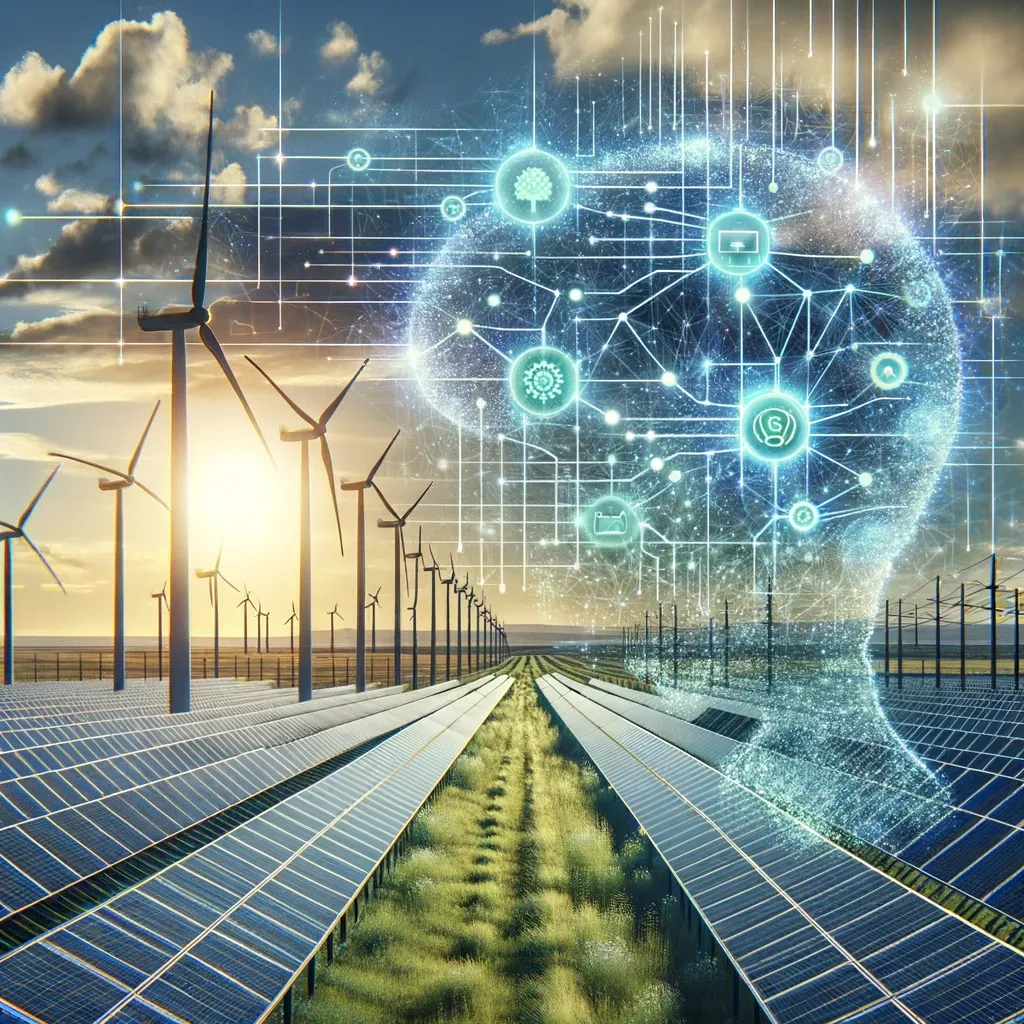
Machine learning for a sustainable energy future
The landscape of renewable energy is undergoing a transformative shift, with machine learning (ML) at the forefront of this revolution. Zhenpeng Yao and the team have provided an excellent view in their 2022 article in Nature Reviews Materials, emphasising the pivotal role of ML in advancing solar and wind energy technologies.
Solar energy
The application of ML in solar energy has led to a significant leap in accurately predicting solar irradiance. By analysing diverse data sets, including historical climatology and satellite imagery, ML algorithms can forecast solar energy production with remarkable precision. This foresight is crucial for balancing electricity supply and demand, paving the way for a reduction in reliance on non-renewable energy sources. Furthermore, ML aids in identifying prime locations for new solar installations and ensuring the longevity of existing panels.
Wind energy
Wind energy, a key pillar of renewable resources, benefits dramatically from ML’s predictive capabilities. ML enables wind farms to optimise turbine operations by forecasting wind patterns, ensuring maximum energy extraction. These predictions are vital for both immediate energy distribution and strategic planning. ML’s role extends to predictive maintenance of wind turbines, pre-empting issues before they escalate into costly repairs or inefficiencies.
Beyond prediction: ML in grid management and storage
The broader integration of ML into renewable energy is not limited to prediction alone. Its application extends to the intricate task of grid management and to better energy storage. ML’s dynamic algorithms facilitate the seamless integration of renewable sources into the power grid, addressing the challenges posed by their variable nature and load imbalances.
A multi-faceted approach to renewable energy optimisation
The journey to optimise renewable energy through ML is comprehensive. It encompasses production forecasting, site selection, maintenance, and grid integration. Dr Yao’s research delves into various facets of this endeavour, including:
- Modelling complex structures: tackling the intricacies of energy material structures.
- Scalable and robust models: adapting to diverse dataset sizes while maintaining accuracy.
- Synthesis route prediction: predicting pathways for new material development.
- Phase degradation prediction: enhancing material cyclability and durability.
- Optimising energy generation and consumption: streamlining power distribution.
- Energy policy optimisation: using ML in crafting effective energy policies.
The article is not just an academic exploration; it’s a call to action for embracing new technologies in pursuit of a sustainable, efficient and cleaner energy future.
If you’re passionate about sustainable energy and technological innovation, this article is a good read. Dive into the full insights and implications of this research in Nature Reviews Materials.
